NSW EV Charger Rebate 2026: Is There a Government Rebate for Home EV Charging?
If you are searching for an NSW EV charger rebate, you likely want a clear answer before committing to installation costs.
Many NSW homeowners are surprised to learn that, as of 2026, there is no direct government rebate for installing a home EV charger at a freestanding residential property.
There have been electric vehicle purchase incentives and major investment in public charging infrastructure. However, a specific government rebate for a home EV charger in NSW does not currently exist.
That does not mean there are no pathways to reduce costs. Below is a clear breakdown of what is available, what is not, and how to approach EV charger installation in New South Wales properly.
Is There an NSW EV Charger Rebate for Homes in 2026?
The short answer is no.
There is currently no standalone NSW EV charger rebate for homeowners installing a wall-mounted Level 2 charger at a house.
Energy NSW official EV guidance
If you install a charger at a freestanding residential property, you are generally responsible for:
- The EV charger unit
- Installation by a licensed electrician
- Dedicated circuit and cabling
- Switchboard upgrades if required
- Protection devices and compliance work
- Any distribution network requirements
Unlike solar panels, EV chargers are not covered under the federal Small-scale Renewable Energy Scheme. This means you do not receive Small-scale Technology Certificates for installing a home EV charging system.
Why There Is No NSW Government Rebate for Home EV Chargers
This is one of the most common questions.
Solar panels qualify for federal incentives because they generate renewable electricity. That generation reduces grid demand and contributes to emissions reduction targets.
An EV charger does not generate electricity. It simply allows you to safely draw power from:
- The electricity grid
- A rooftop solar system
- A home battery
Because it is classified as an electrical load rather than a renewable energy generator, it does not qualify for STCs.
NSW policy has largely focused on:
- Encouraging EV vehicle uptake
- Supporting public fast-charging networks
- Addressing infrastructure challenges in apartment buildings
- Accelerating broader transport electrification
As a result, there is currently no dedicated EV home charger subsidy in NSW for standalone houses.
What EV Incentives Are Available in NSW in 2026?
Although there is no NSW EV charger government rebate, the state has introduced other electric vehicle incentives over recent years.
These have included:
- Stamp duty exemptions for eligible electric vehicles
- Purchase rebates for EVs within certain price thresholds
- Co-investment in public charging infrastructure
- Funding support for strata and apartment charging upgrades
Some vehicle rebates have closed or been revised. Programs are reviewed periodically, so eligibility conditions can change.
The important distinction is this: vehicle incentives do not automatically include a home charging rebate.
Full eligibility details were previously published by Revenue NSW electric vehicle incentives.
Support for Apartment and Strata Buildings in NSW
While freestanding houses do not receive a direct charger rebate, some NSW initiatives have supported multi-dwelling buildings.
Apartment and strata properties often face additional challenges, such as:
- Limited common property electrical capacity
- Shared metering arrangements
- Complex approval processes
- Load management constraints
Targeted programs have helped eligible buildings upgrade shared infrastructure to enable EV charging.
If you live in an apartment or townhouse under strata management, it is worth investigating building-level funding programs. These differ from individual homeowner rebates and are assessed at the building level rather than per resident.
Can You Claim Solar or Battery Rebates When Installing an EV Charger?
EV chargers are not eligible under the Small-scale Renewable Energy Scheme, which applies to approved renewable energy generation systems.
However, if you install:
- A solar PV system
- An eligible battery system
Those systems may qualify for federal incentives depending on size and configuration.
Some NSW homeowners choose to install solar at the same time as their EV charger. While the charger itself is not rebated, the solar system may reduce overall project cost through STCs.
This is often how households offset part of the electrification upgrade.
How to Reduce EV Charging Costs Without a Rebate
Even without an NSW electric vehicle charging rebate, solar can significantly reduce ongoing charging costs.
Charging from rooftop solar allows you to:
- Use self-generated electricity during the day
- Reduce reliance on peak grid pricing
- Increase solar self-consumption
- Improve system return over time
If your property already has solar installed, a compatible EV charger can enable:
- Solar-priority charging
- Scheduled daytime charging
- Dynamic load management
- Reduced energy export
Across New South Wales, many households are shifting towards integrated energy systems rather than treating EV charging as a standalone installation.
Pairing your EV charger with solar panel installation can significantly reduce charging costs by using self-generated electricity.
What Does It Cost to Install a Home EV Charger in NSW?
There is no universal installation cost because every property is different.
Key factors include:
- Distance between switchboard and charger location
- Single-phase versus three-phase power supply
- Available spare capacity in the switchboard
- Cable routing complexity
- Load management requirements
- Distribution network compliance
A compliant residential installation in NSW typically includes:
- A dedicated circuit
- RCD protection
- Correct circuit breaker sizing
- Compliance with AS/NZS 3000 Wiring Rules
- Proper earthing and isolation
Older homes, particularly in established Sydney suburbs and regional areas, may require a switchboard upgrade before a charger can be installed safely.
A licensed electrician must assess the site to provide accurate pricing.
Financial Alternatives to an NSW EV Charger Rebate
While there is no direct government rebate for a home EV charger in NSW, some alternatives may assist.
Green and Sustainability Loans
Some lenders offer:
- Green home upgrade loans
- Sustainability finance products
- Low-interest electrification loans
These may apply when EV chargers are bundled with:
- Solar PV systems
- Battery storage
- Broader home electrification upgrades
Loan terms and eligibility vary by provider.
Time-of-Use and EV Electricity Plans
Many electricity retailers offer EV-friendly tariffs, including:
- Lower overnight charging rates
- Controlled load options
- Dedicated EV time-of-use pricing
While this does not reduce installation costs, it can reduce ongoing charging expenses.
Choosing the Right EV Charger for Your NSW Home
Before installing an EV charging system, it is important to assess:
- Single-phase versus three-phase supply
- Required charging speed
- Daily driving distance
- Solar compatibility
- Future battery integration
- Load balancing capability
Modern chargers often include:
- App-based monitoring
- Scheduled charging
- Solar tracking modes
- Dynamic load management
Correct sizing ensures the charger operates safely within your home’s electrical limits and complies with NSW distribution network requirements.
Compliance and Safety Requirements in NSW
All EV charger installations in NSW must comply with:
- AS/NZS 3000 Wiring Rules
- NSW electrical safety regulations
- Local distribution network service provider requirements
- Manufacturer installation guidelines
A licensed electrician must perform the installation.
Continuous EV charging from a standard household power outlet without proper circuit assessment can present safety risks. A dedicated circuit with appropriate protection is the correct approach.
How Decarby Solar Supports EV Charger Installation in NSW
At Decarby Solar, EV charger installation is considered part of a broader electrification strategy rather than a single appliance upgrade.
Each project typically involves reviewing:
- Switchboard capacity
- Existing solar generation
- Potential battery integration
- Future electrification plans
- Load management requirements
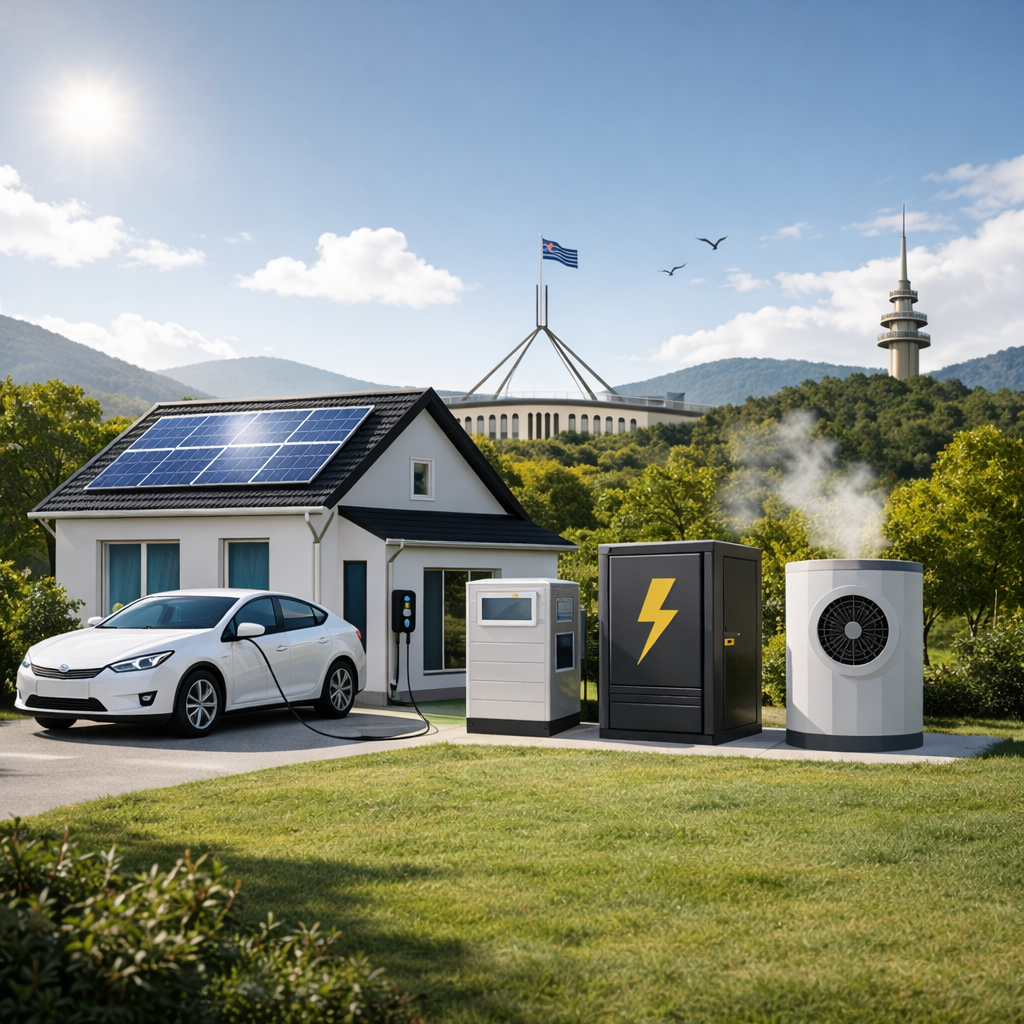
Many households across New South Wales are combining:
- Solar PV systems
- Battery storage
- EV charging
- Heat pump hot water
- High-efficiency air conditioning
Decarby Solar designs EV charging systems to align with Australian standards, network compliance requirements and long-term household energy planning. The focus is on safe integration and scalability rather than short-term hardware decisions.
If you’re ready to proceed, Decarby Solar can help with professional EV charger installation services tailored to your home and electrical system.
Frequently Asked Questions About NSW EV Charger Rebates
The Bottom Line on NSW EV Charging Rebates for Homes

If you are searching for an NSW EV charging rebate for homes, there is currently no direct government rebate covering installation costs for freestanding houses.
However:
- Apartment buildings may access targeted infrastructure programs
- Solar rebates can reduce broader electrification costs
- EV electricity tariffs can lower ongoing charging expenses
- Green finance products may assist with upfront investment
For many NSW homeowners, the decision to install a home EV charger is less about waiting for a rebate and more about ensuring the electrical system is properly designed for long-term electrification.
A well-planned installation, integrated with solar or battery systems where appropriate, often delivers stronger long-term value than relying solely on government incentives.


.png)