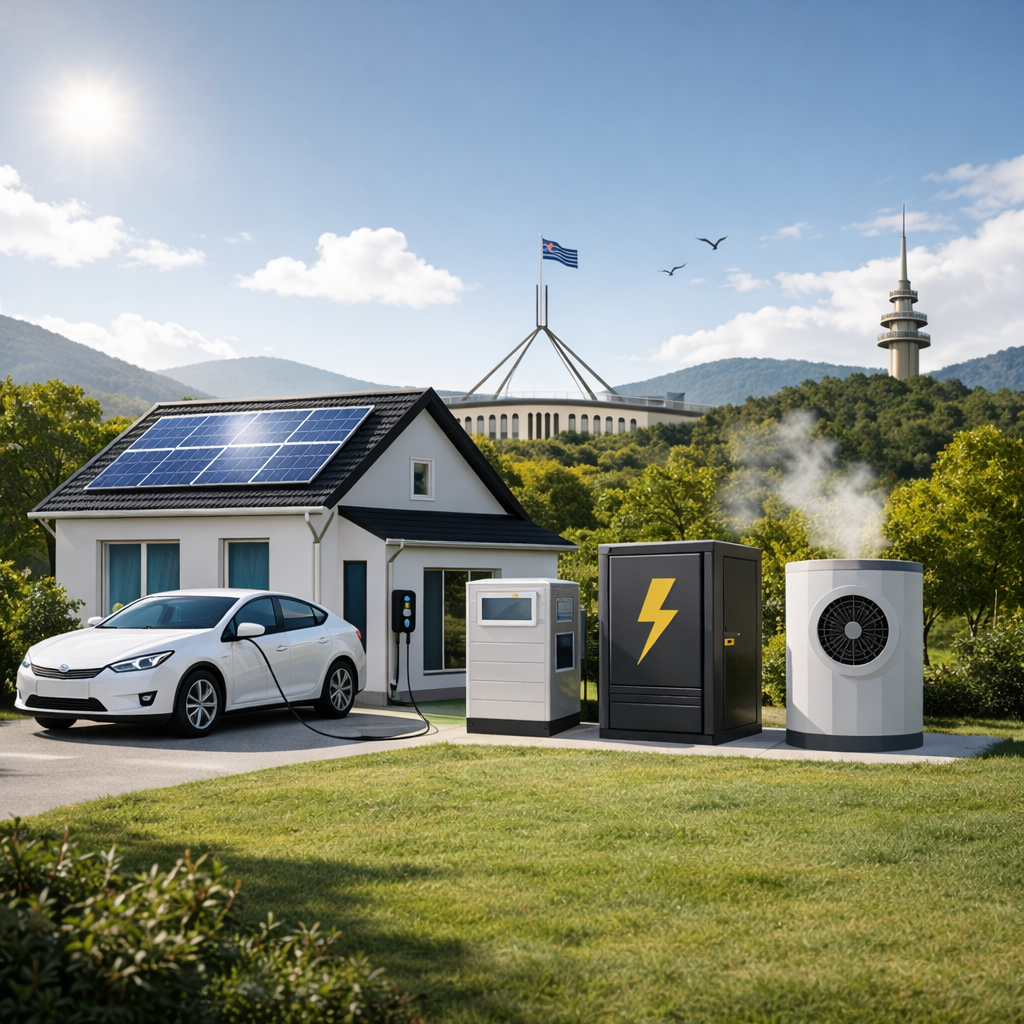
Using Brighte for ACT Government Energy Loans and Rebates in the ACT
Home electrification is accelerating across Canberra. Solar panels, battery systems, heat pump hot water and EV chargers are becoming standard upgrades for households moving away from gas. One of the key enablers behind this shift is the Brighte ACT loan, delivered under the ACT Government’s Sustainable Household Scheme.
If you are researching how the Brighte ACT loan works, what it covers, and how it fits into a broader energy upgrade plan, this guide explains it clearly and practically.
What Is the Brighte ACT Loan?
The Brighte ACT loan is the finance mechanism used to deliver the ACT Government’s Sustainable Household Scheme.
It is:
- A zero-interest loan
- Designed to support eligible energy-efficient upgrades
- Available to approved ACT homeowners
- Delivered by Brighte as the finance provider
It is important to clarify that this is not a rebate. It is a finance arrangement that allows you to spread the cost of approved upgrades over time, subject to credit approval and scheme conditions.
If you are unsure how loans differ from rebates or federal incentives, our article on ACT solar rebates and ACT battery rebates explained provides useful context around how different support mechanisms interact.
What Can You Use a Brighte ACT Loan For?
The Sustainable Household Scheme supports a range of approved electrification upgrades. Eligibility and product lists are subject to current ACT Government guidelines.
Common eligible categories include:
Solar PV Systems
- Grid-connected rooftop solar
- Systems installed in accordance with Australian Standards
- Designed to meet ACT compliance requirements
Solar remains one of the most common uses of the Brighte ACT loan. If you are still assessing system size, our solar system size guide for Australian homes explains how to determine the right capacity based on household usage.
Battery Energy Storage
- Home battery systems paired with solar
- Systems designed to increase self-consumption
- Installations meeting relevant safety and electrical standards
Before financing a battery, it is worth reviewing whether storage aligns with your usage profile.
Heat Pump Hot Water Systems
- Energy-efficient electric hot water replacements
- Upgrades replacing gas or older electric resistance systems
Hot water can represent a significant portion of household energy use. Electrifying this load is often one of the first steps in reducing gas reliance.
EV Chargers
- Dedicated home EV charging equipment
- Installations incorporating load management where required
If you are planning to charge from solar, careful integration matters. Our EV charger installation service page outlines key considerations for safe and compliant setups.
Who Is Eligible for the ACT Government Energy Loan?
Eligibility for the Brighte ACT loan typically depends on:
- The property being located within the ACT
- The applicant being the property owner
- The upgrade falling within approved product categories
- Meeting Brighte’s lending criteria
The scheme also includes maximum loan amounts. These caps can influence how solar systems and batteries are designed, particularly for larger homes with higher electricity demand.
Because this is a finance product, credit approval is required. Loan terms, repayment structures and fees are set out in the finance agreement.
How Repayments Work
A defining feature of the Brighte ACT loan is its zero-interest structure. You repay the amount borrowed without added interest, subject to the loan terms.
Key considerations include:
- Fixed repayment schedules
- Defined loan terms
- Credit checks as part of the application process
- Potential establishment or administrative fees
Although there is no interest component, it remains a loan obligation. It is important to assess whether repayments align with your broader financial plans.
How the Loan Interacts with Federal Solar Incentives
The Brighte ACT loan is separate from federal solar incentives such as Small-scale Technology Certificates.
STCs reduce the upfront cost of eligible solar systems. They are applied before finance is calculated, which can lower the total amount required under the loan.
If you want a detailed explanation of how STCs work, our article on federal solar incentives explained in Australia breaks down how certificates are calculated and applied.
Understanding the difference between:
- Federal incentives
- ACT Government loans
- State-based rebates
helps avoid confusion when comparing options.
Designing Solar and Battery Systems Within Loan Caps
Loan caps often influence system design decisions.
It can be tempting to simply size a system to the maximum allowable loan amount. In practice, effective design should be based on:
- Historical electricity usage
- Future electrification plans
- Roof orientation and shading
- Load profiles across the day
Oversizing without analysing usage can lead to underutilised generation. Our article on why bigger solar systems are not always better explains why careful system design often delivers betterlong-term outcomes than simply installing the largest possible array.
At Decarby Solar, discussions around the Brighte ACT loan often begin with finance questions but quickly shift to system planning. Many ACT homeowners are looking to combine solar, battery storage and heat pump hot water into a staged electrification plan. Designing within scheme limits while maintaining performance requires practical installation experience and a clear understanding of ACT compliance requirements.
Using the Brighte ACT Loan as Part of a Broader Electrification Plan
For many households, the loan is not just about installing solar. It is part of a longer-term shift away from gas.
Common staged upgrade pathways include:
- Install solar PV
- Replace gas hot water with a heat pump
- Add battery storage
- Install an EV charger
- Transition cooking and space heating to electric
Taking a whole-of-home view can help avoid stranded gas infrastructure and repeated electrical upgrades.
If you are exploring this pathway, reviewing related topics such as solar sizing, battery economics and incentive structures can provide clarity before committing to finance.
Benefits and Considerations
Benefits
- Zero interest finance structure
- Reduced upfront capital requirement
- Supports transition to all-electric homes
- Encourages investment in energy-efficient technologies
Considerations
- It is still a repayable loan
- Credit approval is required
- Loan caps may limit larger combined upgrades
- Not all products or configurations may qualify
A balanced assessment is essential before proceeding.
Is the Brighte ACT Loan Right for You?
The loan may suit homeowners who:
- Want to electrify but prefer staged repayments
- Are planning multiple upgrades over time
- Intend to stay in the property longer term
- Want predictable repayment structures
It may be less suitable for those who prefer to avoid finance entirely or who plan to sell in the near future.
Each household’s situation differs. Energy usage, roof configuration, switchboard capacity and long-term electrification plans all influence whether a Brighte ACT loan is appropriate.
When approached thoughtfully, the combination of structured finance and well-designed energy systems can support a practical transition toward a more efficient, all-electric home in the ACT.